
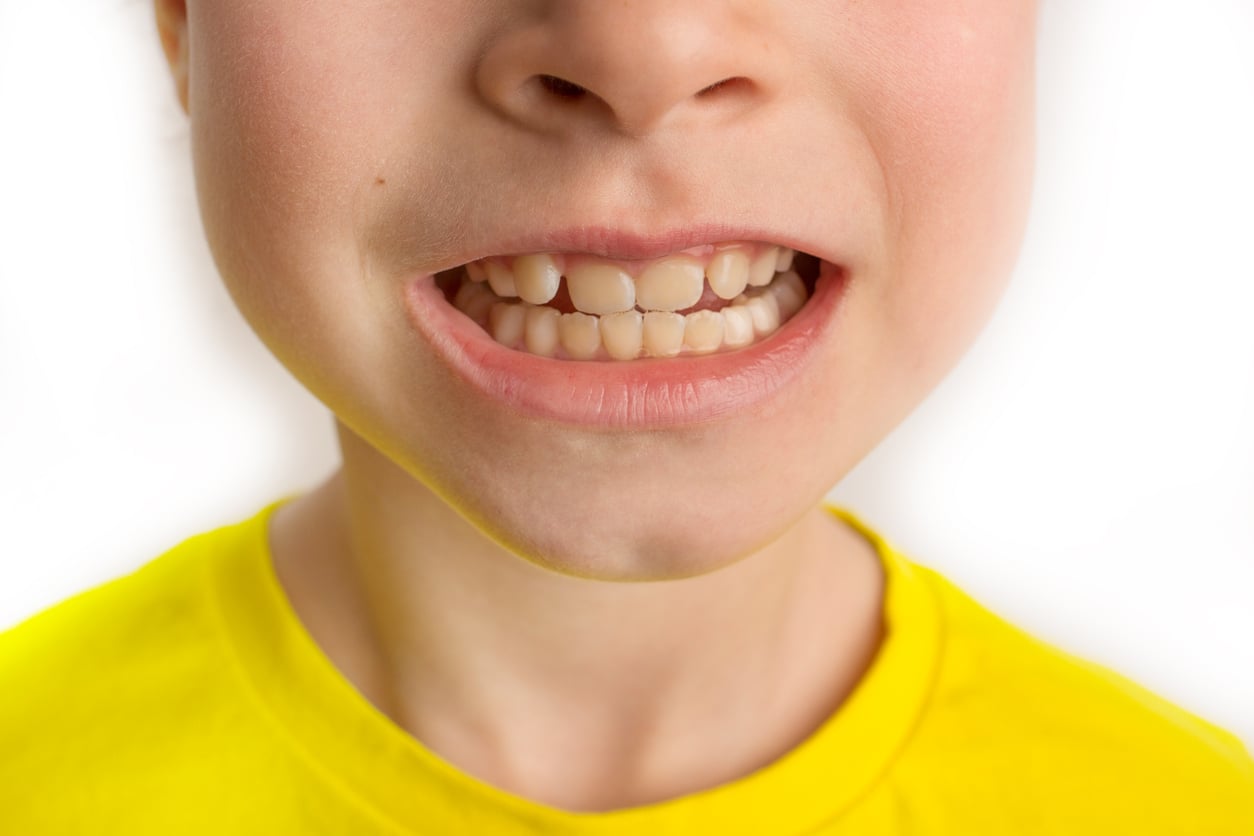
| Quick Answer: Most often, it’s completely normal. Permanent teeth are naturally more yellow than baby teeth because they have more dentin and thinner, more see-through enamel — so the contrast stands out when new teeth erupt beside whiter baby teeth. Less common causes include plaque, staining, fluorosis, or injury. Have it checked if the color is uneven, a single tooth is dark, or brushing doesn’t help. |
It’s a moment that surprises a lot of parents: a new permanent tooth comes in looking noticeably more yellow than the baby teeth around it. Our kid-focused dentists at South Valley Children’s Dentistry in Albuquerque hear this worry often — and the reassuring news is that it’s usually nothing to fix.
Is Yellow Normal for New Permanent Teeth?
Usually, yes. The color difference between baby teeth and permanent teeth is built in. It’s most noticeable during the mixed-teeth years — roughly ages 6 to 12 — when bright white baby teeth sit right next to the more natural, slightly yellower permanent teeth.
Why Permanent Teeth Look More Yellow
- More dentin — permanent teeth have a larger core of the naturally yellow inner layer.
- Thinner, more translucent enamel — so the dentin shows through more.
- Baby teeth are whiter and more opaque — making the contrast look dramatic.
In other words, the permanent tooth isn’t “discolored” — it’s simply its natural adult color next to a baby tooth.
Other Possible Causes
- Plaque buildup from rushed brushing, which looks dull and yellow
- Surface stains from food, drinks, or habits
- Fluorosis — faint white or, occasionally, brownish marks from extra fluoride during tooth formation
- A single darker or grayer tooth following an injury
When to Have It Checked
Bring your child in if the color is uneven from tooth to tooth, a single tooth looks dark, there are brown or pitted spots, or the yellow doesn’t improve with good brushing. Our kid-focused team will find the cause before recommending anything — and reassure you when it’s simply normal.
Keeping Permanent Teeth Bright
- Brush twice daily with fluoride toothpaste; supervise younger kids.
- Floss daily and keep up regular cleanings.
- Limit deeply colored, sugary drinks; choose water.
- Skip adult whitening products, which aren’t made for developing smiles.
Visit South Valley Children’s Dentistry
If your child’s new teeth have you wondering, our kid-focused team on Coors Blvd SW is glad to take a look and put your mind at ease. We care for South Valley families and children from 9 months through age 18 (special needs to 26). Contact our office to schedule.
Frequently Asked Questions
Why are my child’s permanent teeth more yellow than their baby teeth?
Permanent teeth have more dentin and thinner, more translucent enamel than baby teeth, so they naturally look more yellow — especially next to whiter baby teeth. It’s usually normal.
Is it normal for new adult teeth to come in yellow?
Yes. New permanent teeth commonly look more yellow than surrounding baby teeth. The contrast is expected and isn’t a sign of a problem.
When should I worry about my child’s yellow teeth?
Have us check if the color is uneven, a single tooth is dark, there are brown or pitted spots, or brushing doesn’t help — these can point to staining, fluorosis, or injury.
Can plaque make my child’s teeth look yellow?
Yes. Plaque from rushed brushing looks dull and yellow. Better brushing and a cleaning usually restore brightness.
Should I whiten my child’s teeth?
Usually not. Some yellowing is just the natural color of permanent teeth, and adult whitening products can irritate young gums. Check with our team first.
|
Wondering about your child’s tooth color? We truly care about your child’s health and happiness. Reach out to get your child’s appointment scheduled. We can’t wait to see you. South Valley Children’s Dentistry & Orthodontics │ 3510 Coors Blvd SW, Suite A, Albuquerque, NM 87121 │ (505) 873-4444 │ Contact Us → |