
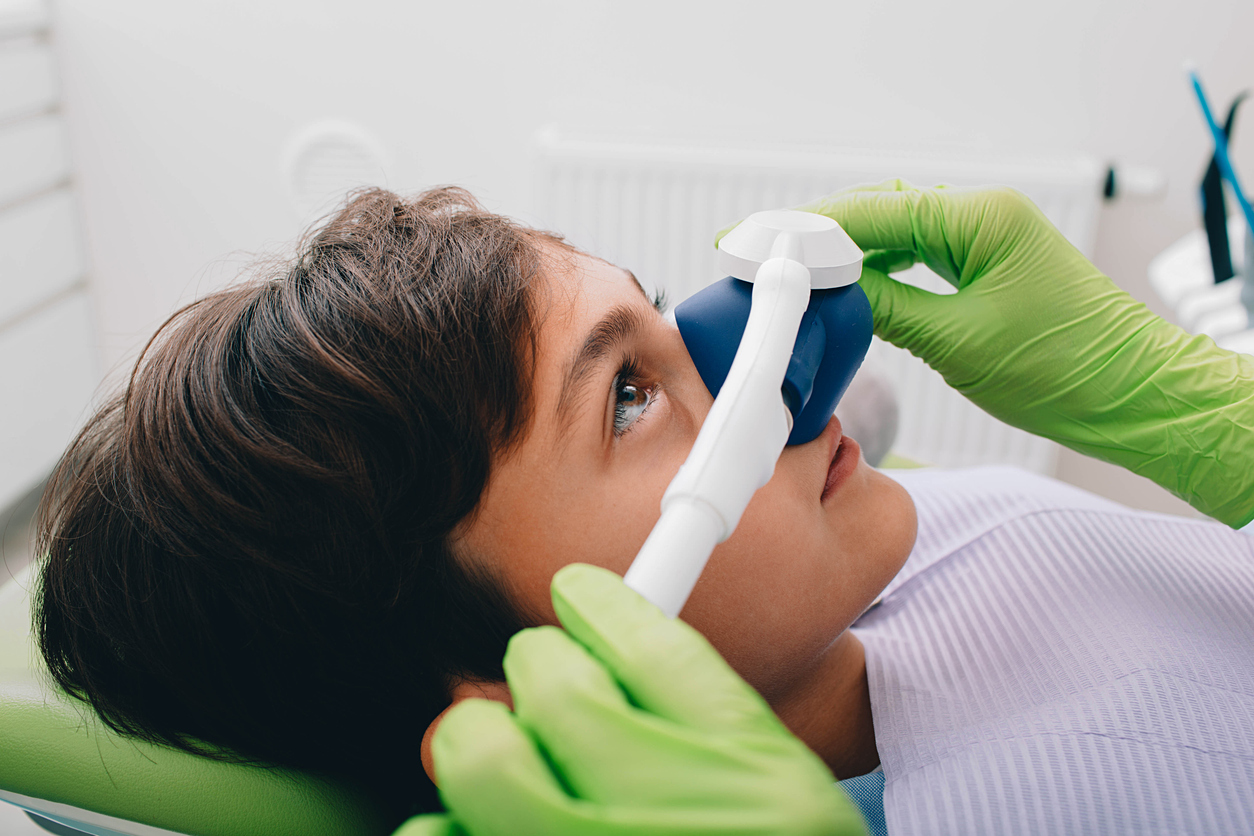
| Quick Answer: Nitrous oxide (“laughing gas”) is a colorless, odorless gas mixed with oxygen and inhaled through a small nose mask during dental treatment. It helps anxious children feel relaxed and slightly euphoric while staying fully awake and able to respond. Effects begin in 2–3 minutes and wear off within 5–10 minutes after the mask is removed — so kids can usually return to school the same day. It’s the lightest form of pediatric dental sedation and one of the safest. |
If your child’s pediatric dentist has mentioned nitrous oxide for an upcoming visit, you’re probably wondering exactly what it does, whether it’s safe, and what to expect. The honest answer: nitrous oxide is the lightest, most commonly used form of pediatric dental sedation — and one of the safest tools in pediatric dentistry. At South Valley Children’s Dentistry in Albuquerque, our kid-focused dentists use it routinely for anxious kids, sensitive procedures, and children who need a little help staying still through a longer appointment.
Here’s what nitrous oxide actually is, when it’s recommended, and what your child will experience.
What Is Nitrous Oxide?
Nitrous oxide (chemical formula N₂O) is a colorless, odorless gas that produces a relaxed, slightly euphoric feeling when inhaled. In dental offices, it’s mixed with oxygen — typically 30–50% nitrous, 50–70% oxygen — and delivered through a small, comfortable nose mask called a “nasal hood.” Your child breathes normally through their nose during the treatment.
It’s been used in dentistry for over 175 years and remains one of the most studied and well-understood sedatives in medicine.
Common nicknames:
- Laughing gas
- Happy gas
- Sweet air
Most kids feel a tingly, “floaty” sensation. Many giggle a little — hence “laughing gas.” Some just feel calmly drowsy.
When Is Nitrous Oxide Recommended for Kids?
Our sedation dentistry team typically recommends nitrous oxide when:
- Your child has mild to moderate dental anxiety
- The procedure is longer or more complex (multiple fillings, an extraction)
- Your child has a strong gag reflex
- Your child has trouble sitting still through the appointment
- A previous dental visit was difficult and you want to make this one easier
- Your child has special healthcare needs that benefit from a calmer state
For severe anxiety or extensive treatment, oral sedation or hospital dentistry may be more appropriate. Your pediatric dentist will recommend the right level of support for your child’s specific situation.
Is Nitrous Oxide Safe for Kids?
Yes — when administered by a properly trained pediatric dental team. Specific safety points:
- Light sedation only. Your child stays awake, breathing on their own, and able to respond. Reflexes (cough, swallow) remain intact.
- Continuous monitoring. A trained team member monitors your child throughout, including the level of nitrous, oxygen saturation, and breathing.
- Built-in safety features. Modern nitrous delivery systems are engineered to never deliver less than 30% oxygen — far above the 21% in normal room air. Your child gets more oxygen during the procedure than they would breathing regular air.
- No injection required. Nitrous is inhaled, which means no needles for kids who fear shots.
- Quickly reversible. When the mask comes off, the team switches to 100% oxygen for a few minutes, and effects clear within 5–10 minutes.
The American Academy of Pediatric Dentistry has detailed guidelines for safe pediatric nitrous oxide use, and our team follows them at every appointment.
What Will My Child Experience?
A typical nitrous oxide visit:
- The dentist or assistant places a small, soft nose mask. Your child practices breathing through their nose while smelling the gas (usually a mild flavored option — strawberry, bubblegum, etc.).
- Within 2–3 minutes, a relaxed, light, “tingly” feeling sets in.
- Treatment proceeds. Your child can hear, see, and respond throughout, but feels calmer and time seems to pass faster.
- When treatment is done, the dentist switches to 100% oxygen for 3–5 minutes.
- Effects fade quickly. Most kids are back to normal within 5–10 minutes of removing the mask.
Some children describe it as feeling “floaty” or “tingly.” Some report time feeling slightly stretched or compressed. Nausea is rare but possible — fasting before the visit reduces this risk.
Side Effects and What to Watch For
Most kids have no side effects at all. Possible mild reactions include:
- Brief nausea (especially if your child ate a heavy meal beforehand — a light meal 2–3 hours before is ideal)
- Headache (rare)
- Slight dizziness immediately after standing up (have them sit a moment first)
- Mild giggling or talkativeness during the procedure (totally normal)
There are no lingering effects. Your child can usually return to school, sports, and normal activities the same day. Unlike oral or IV sedation, nitrous oxide does not require fasting or post-procedure recovery time.
Visit South Valley Children’s Dentistry
We use nitrous oxide regularly for South Valley and Albuquerque-area kids who benefit from a calmer dental experience. For more involved cases, we also offer oral sedation and pediatric hospital dentistry. Our office at 3510 Coors Blvd SW accepts Medicaid and most insurance plans.
Frequently Asked Questions
Is nitrous oxide safe for kids?
Yes — when administered by a trained pediatric dental team with continuous monitoring. Modern nitrous delivery systems engineer in safety features (always at least 30% oxygen, never delivering pure nitrous), and effects reverse within minutes.
Will my child be asleep on laughing gas?
No. Nitrous oxide is light sedation — your child stays fully awake, breathing on their own, and able to respond. They simply feel more relaxed and slightly euphoric. They’ll likely remember the appointment afterward.
How long does nitrous oxide take to wear off?
Effects begin to fade as soon as the mask is removed and the dentist switches to 100% oxygen. Most kids are fully back to normal within 5–10 minutes. There are no lingering effects, and your child can return to school the same day.
Does my child need to fast before nitrous oxide?
A light meal 2–3 hours before the appointment is ideal — avoid heavy meals immediately beforehand to reduce the small risk of nausea. Unlike oral or IV sedation, full fasting is not required for nitrous alone.
What’s the difference between nitrous oxide and oral sedation?
Nitrous oxide is inhaled, takes effect in 2–3 minutes, wears off in 5–10 minutes, and keeps your child fully awake. Oral sedation is a liquid medication that produces deeper, longer-lasting calm — typically used for more involved treatment or higher-anxiety cases.
Will my child remember the dental visit on nitrous oxide?
Most kids do remember the visit — nitrous oxide doesn’t typically cause memory loss. It just makes the experience feel calmer and shorter. This is one reason it works well: positive memories build comfort with future visits.
|
Considering nitrous oxide for your child? We truly care about your child’s health and happiness. Reach out to get your child’s appointment scheduled. We can’t wait to see you. South Valley Children’s Dentistry │ 3510 Coors Blvd SW, Suite A, Albuquerque, NM 87121 │ (505) 873-4444 │ Contact Us → |